
Lumistep
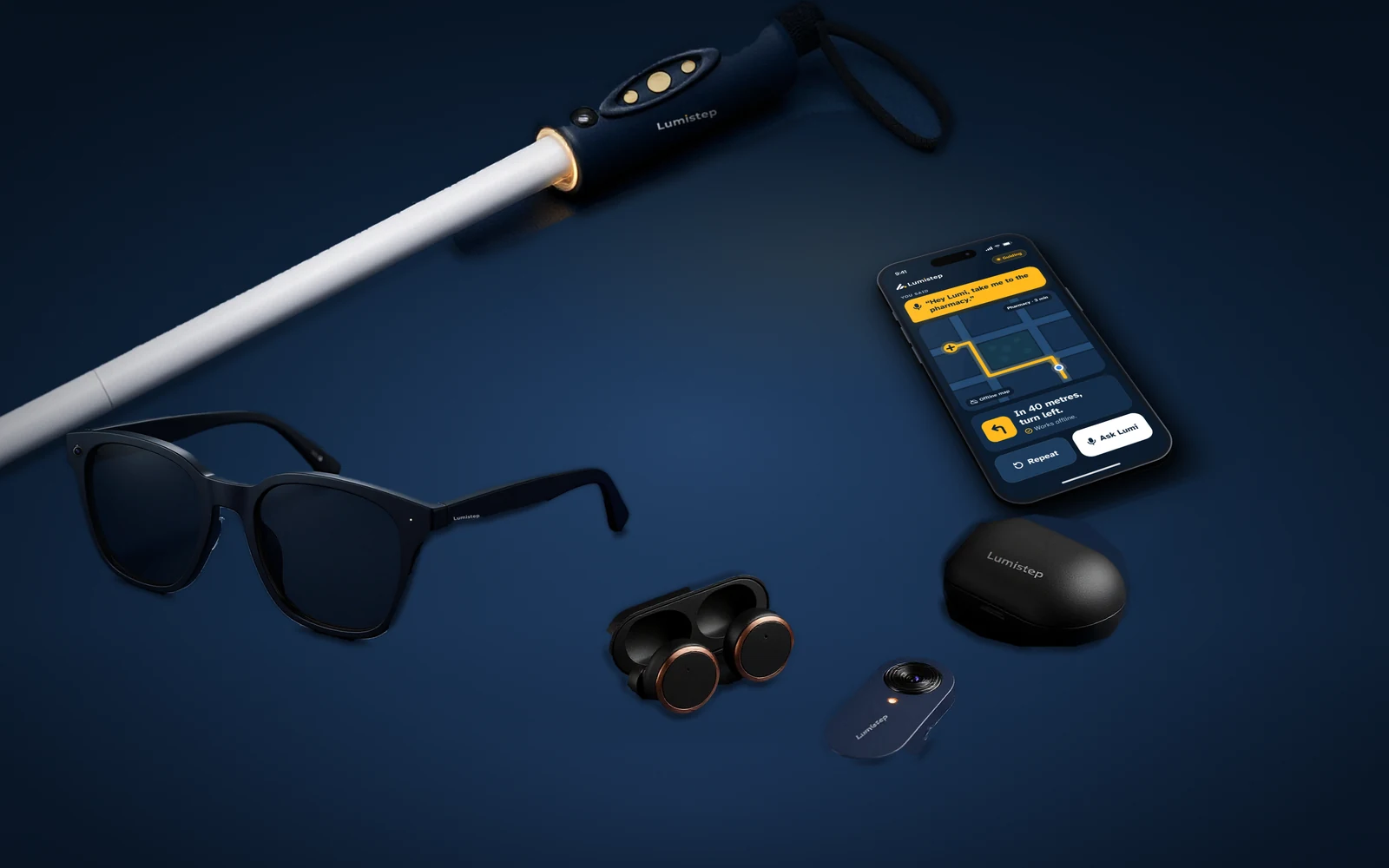
The Lumistep family in a studio photograph: the cane with its amber Lumi ring, smart glasses and earbuds with the vision clip. Concept products.

In development · nothing for sale yet

Investors and partners

Cane-first, offline and priced for the whole world.

43 million people are blind, and 90% of people with sight loss live in low- and middle-income countries.[2][1] The smart aids that exist cost US$850 to US$5,000 and most need the internet. Lumistep is a smart cane, glasses or tiny earbuds and an offline app, planned at US$199 / £149 a kit, and from about US$89 where incomes are lowest, starting in South Asia.

Blind people worldwide
43M
And 295 million more with moderate or severe sight loss (2020).[2]
Where they live
90%
Of people with sight loss live in low- and middle-income countries.[1]
Today's smart aids
$850+
The best-known smart cane, in US retail. Camera glasses cost up to US$3,499.[19][10]
Lumistep, planned
$199
A kit: the smart cane plus glasses or buds. £149 in the UK; from about US$89 where incomes are lowest.

Where we are today · November 2026

In engineering development. Field trials in February.

Hardware, Lumi OS and the app are in active development. Seed investors back evidence, so here is exactly what exists and what does not. Nothing is for sale yet.
  1. Status: Complete

    Industrial design: done.

    Cane, glasses, buds and app specified, down to every part.

  2. Status: In progress

    Engineering prototypes: in progress.

    Sensing, haptics and Lumi Vision brought together on proven modules.

  3. Status: In development

    Lumi OS and app: in progress.

    Written by our own team with the ANB Codes studio.

  4. Status: February 2027

    Field trials: planned.

    Paid blind participants on real streets, then a field pilot with a blind charity.

  5. Status: Mid 2027

    Certification: planned.

    Radio, electrical safety and battery testing before anything is sold.

  6. Status: Late 2027

    First production kits: planned.

    First kits on sale in South Asia and the UK.

Done

  • Done: Product concept and target specification for the cane, glasses, buds and app
  • Done: Market, competitor, regulation and impact research with every source published
  • Done: Brand, website and the start of the app, built in-house
  • Done: A dated plan from first interviews to first kits on sale in late 2027

Not yet

  • Not yet: Engineering prototypes are in progress; none has been tested with users yet
  • Not yet: No users, testers, revenue or pre-orders; nothing is for sale
  • Not yet: No signed partners, letters of intent or supplier contracts
  • Not yet: No grants won and no patents filed
  • Not yet: No independent evidence yet that Lumistep improves outcomes

The problem and the market

Millions need it. Almost nobody can afford what exists.

This is a global problem. We start from the world's numbers, then size our first launch markets from the bottom up: blind people, times one kit at the local price. Vendor reports are shown only for context, because they disagree with each other by up to five times.
Blind people
43M
Worldwide, 2020.[2]
More with moderate or severe sight loss
295M
Worldwide, 2020.[2]
A year in lost productivity
US$411B
Working-age people only, in 2018 PPP dollars.[134]
In low- and middle-income countries
90%
Where most people with sight loss live, and where aids cost up to six times the factory price.[1][5]

One product, every region. A deliberate order.

We start where the need is greatest and costs are lowest, in South Asia, with premium markets (the UK, Europe, the US and the Gulf) funding the mission.
  • UK 2027

    Europe and the UK

    Premium market. The UK launches with the first kits.

    About 2.65 million blind people across Europe, 1.53 million of them in Western Europe.[2] In the UK, around 320,000 are registered.[72][136]

  • Next

    North America

    Premium market. Direct sales first, then public buyers.

    About 1.1 million blind people in the US, within 7.1 million with vision loss (US definitions).[137][73] About 0.71 million on the WHO definition across high-income North America.[2]

  • Next

    Middle East and the Gulf

    Premium market, reached through distribution partners and public disability programmes.

    About 3.1 million blind people across North Africa and the Middle East.[2] In the Gulf states, roughly 135,000–240,000: our estimate from published country rates, not an official count.

  • Launch 2027

    South and Southeast Asia

    Where we start: the greatest need and the lowest costs to build and test.

    11.9 million blind people in South Asia, plus 96 million with moderate or severe sight loss,[3] and 5.95 million blind in Southeast Asia.[2] South Asia loses about US$62 billion a year in productivity, the biggest share of GDP of any region.[134]

  • Later

    Africa

    Through NGOs, governments and sponsored kits, once the model is proven.

    About 5.1 million blind people in sub-Saharan Africa.[2]

  • Later

    Latin America

    Through NGOs, governments and sponsored kits, once the model is proven.

    About 3.7 million blind people in Latin America and the Caribbean.[2]

Our first four launch markets: one kit for every blind personArithmetic shown in every row: people × planned kit price in US$ (at $1 = £0.76 = Tk 122 = ₹88). Ranges use the low and high published counts. Light bar = high count.
  • India

    Blind people (low – high)
    About 5M (0.36% in the national survey)[70] – 9.2M (IAPB model)[69]
    Kit price
    ₹7,999 ≈ $91
    People × price = one-time TAM
    4.8M–9.2M × $91 = $436M–$836M
  • Bangladesh

    Blind people (low – high)
    0.53M or 0.75M (survey, both reported)[71] – 0.9M (IAPB model)[69]
    Kit price
    Tk 10,900 ≈ $89
    People × price = one-time TAM
    0.53M–0.9M × $89 = $47M–$80M
  • United Kingdom

    Blind people (low – high)
    0.32M registered[72]
    Kit price
    £149 ≈ $196
    People × price = one-time TAM
    0.32M × $196 = $63M
  • United States

    Blind people (low – high)
    1.08M (US definition)[137]
    Kit price
    $199
    People × price = one-time TAM
    1.08M × $199 = $215M
  • Total

    Blind people (low – high)
    6.73M – 11.50M
    Kit price
    People × price = one-time TAM
    About $762M – $1.19B one-time · about $190M–$298M a year if kits are replaced every 4 years
Bottom-up total addressable market by country
CountryBlind people (low – high)Kit pricePeople × price = one-time TAM
IndiaAbout 5M (0.36% in the national survey)[70] – 9.2M (IAPB model)[69]₹7,999 ≈ $914.8M–9.2M × $91 = $436M–$836M
Bangladesh0.53M or 0.75M (survey, both reported)[71] – 0.9M (IAPB model)[69]Tk 10,900 ≈ $890.53M–0.9M × $89 = $47M–$80M
United Kingdom0.32M registered[72]£149 ≈ $1960.32M × $196 = $63M
United States1.08M (US definition)[137]$1991.08M × $199 = $215M
Total6.73M – 11.50MAbout $762M – $1.19B one-time · about $190M–$298M a year if kits are replaced every 4 years
From TAM to SAM to SOMSquare areas are drawn to scale. The SOM is small on purpose: it is a share we can realistically reach.

How to read this

No survey of long-cane use exists in any of our four countries, so the SAM and SOM shares are our judgement, not data.

For scale: India's SmartCane, the only low-cost electronic cane with public numbers, sold about 8,000 units by 2015 and distributed more than 20,000 by 2019.[75][74][153] Our SOM assumes about twice its pace, at about twice its price. That only works if institutions buy, not retail alone.

For context only: commercial studies put assistive technology for blind and low-vision people at roughly US$6 billion worldwide in 2025, growing about 10–12% a year.[142][143] Estimates range from about US$1 billion to US$12 billion depending on what is counted, so our own sizing is bottom-up.

Why now

Five years ago this kit could not be built at this price.

Six things changed at once. Parts got cheap, phones got clever, and the companies that sold expensive glasses started to step back.
  • Supply chain

    7M+

    Glasses parts are made by the millions

    EssilorLuxottica sold more than 7 million Ray-Ban and Oakley Meta glasses in 2025,[77][144] and smart-glasses shipments grew 212% in the first half of 2026, though IDC sees growth slowing.[78][145] Frames, batteries and speakers are now commodity parts.

  • Sensors

    60 GHz

    Radar and laser are off-the-shelf chips

    60 GHz radar chips and multizone laser distance sensors are now stocked by mainstream distributors,[79][80] and event-based vision sensors run at about 3 mW.[28]

  • On-device AI

    Offline

    Phones run AI without the internet

    Android's screen reader already describes images on the device, even offline.[81] That makes an offline-first product realistic.

  • Language

    79% → 11%

    South Asian speech has caught up

    Open speech recognition for Bangla, our first South Asian language, fell from about 79% to 11% word error after fine-tuning (normalised, on read speech).[82] Regional dialects are still hard,[83] so we start with English and standard Bangla and add languages as we test.

  • Access

    75%

    Phones and public schemes are in place

    75% of households in Bangladesh own a smartphone.[84] India's ADIP scheme pays the full cost of aids up to ₹15,000 for people earning up to ₹22,500 a month, with ₹316.7 crore for 2025-26.[154][85] White canes are a WHO priority product.[87]

  • Market gap

    2024–26

    Specialists are retreating

    Envision said in October 2026 that its development stops at the end of the year unless a partner is found;[10] OrCam left vision products in 2024.[11] The low-price end is open.

Product and moat

Built around the cane people already trust.

Three devices and one app. The cane does the safety-critical job on its own; the glasses or buds add reading and description; the app guides you without a signal.
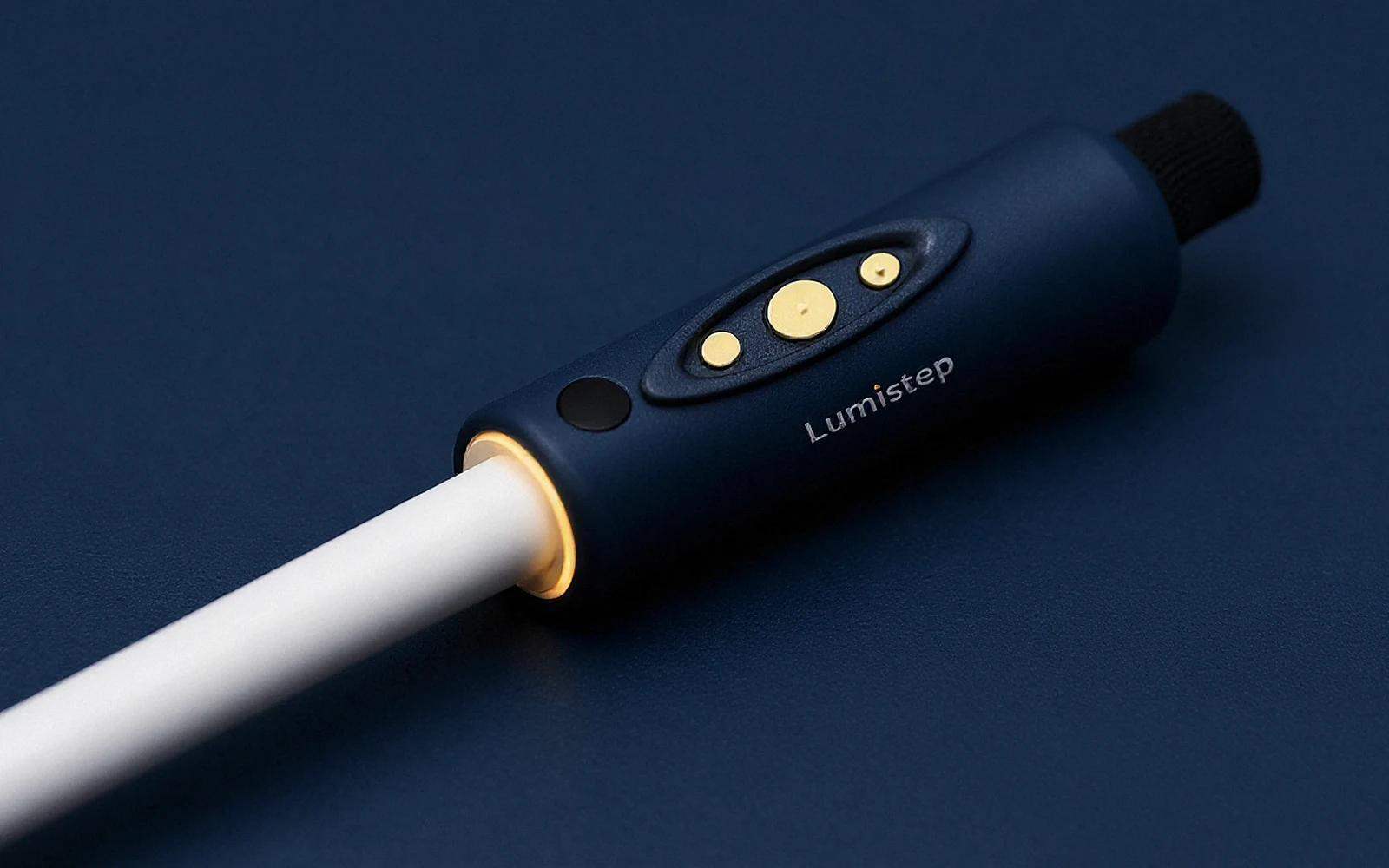
Studio close-up of the Lumistep smart handle: the front sensor lens, the recessed thumb pad with three flush gold buttons and the amber Lumi ring. Concept product.
  1. Cane-first

    A smart cane where safety matters

    The Lumistep Smart Cane: a slim straight smart handle with 60 GHz radar behind a front sensor lens, a downward laser for drops, left and right haptics, Talk, Call and SOS buttons in a guarded thumb pad and the amber Lumi ring, on a folding white shaft. It feels the path ahead and warns by vibration. Even Envision's co-founder says glasses should not be a primary navigation tool.[25] A flat battery still leaves a normal cane.

  2. Offline

    Works without a signal

    Obstacle warnings, offline maps, voice in English and South Asian languages (starting with Bangla) and reading all run on the device and phone. If Lumistep's servers ever stopped, the core would keep working, unlike glasses that stop when a subscription stops.[102]

  3. Lumi Vision

    An ultra-low-power vision sensor

    Our ultra-low-power vision sensor (event-based) reports only what changes, at about 3 mW.[28] That means much longer battery life, a smaller battery, a simpler device and fewer parts to wear out. Reading still text this way is new science, and our tests will decide whether a low-detail reading mode is also needed.[30]

  4. Lumi OS

    Our own firmware

    The glasses are built by a factory to our design and run our own firmware, Lumi OS. We control the features, the updates and how long the product is supported.

  5. In-house software

    We write the code ourselves

    The app, Lumi OS and this website are built by the founding team with the ANB Codes studio. That lets us change fast after each round of testing.

  6. Price

    A quarter of today's price, or less

    US$199 a kit against US$850 for the best-known smart cane.[19] Where incomes are lowest, from about US$89, starting in South Asia. Every part is chosen with that price in mind.

What is, and is not, defensible today

We have filed no patents and claim none. Today our edge is execution: our own firmware and app, offline voice in South Asian languages, sensor tuning learned from real cane use, cost engineering and, once they exist, relationships with schools, NGOs and public schemes. Treat it as an execution advantage, not protected IP, until filings exist.

The first ask · pre-seed

Raising our first round.

We are raising our first round to complete engineering and run field trials. It buys evidence, not tooling: moulds and factory work come only after field results.

The first ask

£5–15k

From angels, friends and family, or small grants.

Our deck, financial model and data room are shared privately after a short call with the founders.

Milestones for this stage · about 6 months

  1. Engineering prototypes completeCane sensing, haptics, glasses, buds and the app working together as one system.
  2. Field trials, February–March 2027Paid blind participants in South Asia and London walk real streets.
  3. Field pilot, April–May 2027Version 2 on our own circuit boards, two months with a blind charity.
  4. Evidence packBattery, accuracy and walking-time results, a demo film and full test logs for investors and partners.

Engineering programme

From engineering prototypes to field evidence.

Lumistep is in engineering development. Hardware, Lumi OS and the app are in active development on proven modules from established chip makers, so the first ask buys validation, not tooling. Moulds and factory work come with the production round.
  1. 01

    Now to January 2027

    Lab validation

    Sensing range in each mode, vibration timing, battery draw and the phone link, measured against our design targets.

  2. 02

    February – March 2027

    Field trials

    Blind participants in South Asia and London walk real streets with the full kit. Paid for their time, guided by an orientation and mobility trainer.

  3. 03

    April – May 2027

    Field pilot

    Version 2 on our own circuit boards, two months with a blind charity. Methods agreed first; results published, good or bad.

What this stage proves

  • Every sensor, vibration pattern and the phone link work together
  • Blind participants walk real streets with the cane and glasses or buds
  • Battery life, sensing accuracy and walking-time results
  • A demo film and full test logs to share with investors and partners

Business model and planned prices

Premium markets fund the mission. The greatest need sets the price.

Premium prices in the UK, Europe, the US and the Gulf support the business; lower prices reach people where incomes are lowest, starting in South Asia. Four revenue lines: kits, optional plans, organisation contracts and sponsored kits. Safety features are free forever.
  • Kits

    One-off hardware

    Kit $199 / £149; cane alone $99 / £79. Lower prices where incomes are lower, starting in South Asia.

  • Plans

    Optional extras

    Free forever, then Plus £3.99, Premium £14.99 and Elite £39 a month, priced lower in South Asia.

  • Organisations

    Bulk and seats

    NGOs, schools and public schemes buy kits and charity seats at £30 per person a year, less in South Asia.

  • Sponsor a kit

    From supporters

    Supporters in richer countries fund a kit for someone who could not otherwise afford one, starting in South Asia.

Planned prices

Planned, November 2026 · nothing is for sale
  • United Kingdom and Europe

    KitCane + glasses or buds
    £149
    Cane alone
    £79
    Plans: Plus / Premium / Elite a month
    £3.99 / £14.99 / £39
    Charity seat, per person a year
    £30
    Payment
    Card
  • United States

    KitCane + glasses or buds
    $199
    Cane alone
    $99
    Plans: Plus / Premium / Elite a month
    —
    Charity seat, per person a year
    —
    Payment
    Card
  • Gulf

    KitCane + glasses or buds
    Premium pricing, set with distribution partners before launch in the region.
    Cane alone
    Premium pricing, set with distribution partners before launch in the region.
    Plans: Plus / Premium / Elite a month
    —
    Charity seat, per person a year
    —
    Payment
    Card
  • South Asia

    KitCane + glasses or buds
    ~$89From about $89 (Tk 10,900 · ₹7,999)
    Cane alone
    ~$45From about $45 (Tk 5,900 · ₹3,999)
    Plans: Plus / Premium / Elite a month
    Tk 99 / Tk 999 / Tk 4,900
    Charity seat, per person a year
    Tk 600
    Payment
    Card and mobile money
Planned prices by market
United Kingdom and EuropeUnited StatesGulfSouth Asia
KitCane + glasses or buds£149$199Premium pricingSet with distribution partners before launch in the region.~$89From about $89 (Tk 10,900 · ₹7,999)
Cane alone£79$99~$45From about $45 (Tk 5,900 · ₹3,999)
Plans: Plus / Premium / Elite a month£3.99 / £14.99 / £39——Tk 99 / Tk 999 / Tk 4,900
Charity seat, per person a year£30——Tk 600
PaymentCardCardCardCard and mobile money

Safety features are free on every plan.

Go-to-market

Sell where buyers already pay.

Institutions already buy canes and smart canes in our markets. Those conversations start with our pilot. None is a partner today, and no logos appear here until agreements exist.

First, early 2027: field trials with blind participants, then a field pilot with a blind charity, schools and NGOs. Goal: user data and letters of intent, not revenue.

  1. United Kingdom

    Direct, VAT-free, then charity retail

    Disability goods can be sold free of VAT.[89] RNIB's shop sells a smart cane at £849 (VAT-free for eligible buyers).[146] Access to Work can pay for equipment, though about 62,100 applications were waiting in March 2025.[90] Approach: NHS routes come later, once we have evidence.

  2. United States

    Direct, then the VA and state programmes

    Direct sales with health-savings-account eligibility, then Veterans Affairs blind rehabilitation.[91] Approach: state vocational rehabilitation services. Medicare does not cover white canes or lens-based low-vision aids, so we do not count on it.[92][155]

  3. Europe

    National assistive-technology schemes

    Approach: country by country after the UK launch, through national schemes and charities, with UKCA/CE marking in place first.

  4. Middle East and the Gulf

    Government disability programmes

    Approach: premium pricing through distribution partners and public disability programmes. Partners are named here only once agreements exist.

  5. Low- and middle-income countries

    Governments and NGOs

    India's ADIP scheme pays the full cost of aids up to ₹15,000 for people earning up to ₹22,500 a month, through NGOs and district centres.[154][20] Our ₹3,999 cane and ₹7,999 kit both fall under that limit, though smart canes are not named in the scheme. SmartCane reached more than 20,000 people through schemes and NGOs.[74] National disability foundations already buy this category: one gave out free smart canes in 2025.[86] Schools for the blind, eye hospitals and corporate giving budgets follow.

  6. Everywhere

    Sponsor a kit

    Diaspora communities send record sums home: remittances to Bangladesh alone reached US$35.6 billion in 2025-26.[88] Supporters there can sponsor a kit for someone who could not otherwise afford one.

Competitor landscape · November 2026

Every dedicated camera product costs 2–25 times more.

Mainstream tools such as camera glasses with Be My Eyes and NaviLens are excellent at reading and description. Lumistep is designed to work alongside them. None senses obstacles at cane level, offline, at a price people in low- and middle-income countries can reach.
Price ladderUS dollars, logarithmic scale. Converted at $1 = £0.76 = ₹88 where a price is published in pounds or rupees (SmartCane ₹3,500 ≈ $40; OrCam £2,700–3,700 ex VAT ≈ $3,550–4,870). Sources in the table below.

Head to head

Lumistep Smart Cane and WeWALK

Both are smart canes. Ours is our own design, built around a different set of sensors and a different price.

  • Sensing

    Radar that works in rain and dust, plus a downward laser for drops. WeWALK uses one upward ultrasonic sensor.

  • Direction

    Left and right haptic motors tell you which side something is on.

  • Offline

    Obstacle warnings and the core app work fully offline.

  • Visibility

    The amber Lumi ring helps people see you at night.

  • Price

    Planned at US$99 for the cane alone, against US$850 US retail for WeWALK.[19][147]

Lumistep and seven leading products

  • Lumistep (planned)

    Price
    $199 / £149 kit · $99 cane · from ~$89 in South Asia
    Works offline
    Yes, core features
    Obstacle sensing
    Yes: radar behind the sensor lens, up to head height, plus a downward laser for drops
    Camera / vision
    Yes: event-based vision sensor
    Funding
    Raising pre-seed
    Status 2026
    In development
  • WeWALK Smart Cane 2

    Price
    $850 US retail; £849 ex VAT at RNIB[19][146]
    Works offline
    Cloud assistant (not confirmed)
    Obstacle sensing
    Yes: one upward ultrasonic sensor
    Camera / vision
    No
    Funding
    £600k seed, £2M, £1.7M grant, $0.9M[93][94]
    Status 2026
    Selling in 60+ countries
  • Glidance Glide

    Price
    Announced at about $1,499 (2024; reported); orders now closed[95]
    Works offline
    Not found
    Obstacle sensing
    Yes: wheeled robot
    Camera / vision
    Yes
    Funding
    $1.5M + $4M reported[96]
    Status 2026
    Pilot rollout; orders closed
  • Biped NOA

    Price
    About $4,990[148]
    Works offline
    Not confirmed
    Obstacle sensing
    Yes: cameras
    Camera / vision
    Yes
    Funding
    CHF 1.2M[97]
    Status 2026
    On sale EU/US
  • Envision Glasses

    Price
    $1,899–3,499[10]
    Works offline
    Partly
    Obstacle sensing
    No
    Camera / vision
    Yes
    Funding
    €1.5M seed[108]
    Status 2026
    Stopping unless partnered
  • OrCam MyEye

    Price
    From £2,700 ex VAT[150]
    Works offline
    Yes
    Obstacle sensing
    No
    Camera / vision
    Yes
    Funding
    $181M raised[99]
    Status 2026
    Left low vision 2024[11]
  • Ray-Ban Meta + Be My Eyes

    Price
    From $379, app free[100]
    Works offline
    No
    Obstacle sensing
    No
    Camera / vision
    Yes
    Funding
    Meta (strategic)
    Status 2026
    Be My Eyes 1M+ users[101]
  • SmartCane (IIT Delhi)

    Price
    ₹3,500[76]
    Works offline
    Yes
    Obstacle sensing
    Yes: ultrasonic
    Camera / vision
    No
    Funding
    Academic and partners
    Status 2026
    20,000+ distributed by 2019[153]
Lumistep compared with seven leading products: price, offline use, obstacle sensing, camera, funding and status
Lumistep (planned)WeWALK Smart Cane 2Glidance GlideBiped NOAEnvision GlassesOrCam MyEyeRay-Ban Meta + Be My EyesSmartCane (IIT Delhi)
Price$199 / £149 kit · $99 cane · from ~$89 in South Asia$850 US retail; £849 ex VAT at RNIB[19][146]Announced at about $1,499 (2024; reported); orders now closed[95]About $4,990[148]$1,899–3,499[10]From £2,700 ex VAT[150]From $379, app free[100]₹3,500[76]
Works offlineYes, core featuresCloud assistant (not confirmed)Not foundNot confirmedPartlyYesNoYes
Obstacle sensingYes: radar behind the sensor lens, up to head height, plus a downward laser for dropsYes: one upward ultrasonic sensorYes: wheeled robotYes: camerasNoNoNoYes: ultrasonic
Camera / visionYes: event-based vision sensorNoYesYesYesYesYesNo
FundingRaising pre-seed£600k seed, £2M, £1.7M grant, $0.9M[93][94]$1.5M + $4M reported[96]CHF 1.2M[97]€1.5M seed[108]$181M raised[99]Meta (strategic)Academic and partners
Status 2026In developmentSelling in 60+ countriesPilot rollout; orders closedOn sale EU/USStopping unless partneredLeft low vision 2024[11]Be My Eyes 1M+ users[101]20,000+ distributed by 2019[153]
Also in the landscape: seven more products
  • .lumen glasses (Romania)

    Price
    Not yet priced for sale
    What it does
    Haptic headset with cameras
    Status 2026
    Not on general sale; about €9M of EU support plus a €5M round[149][98]
  • Ally Solos (Envision)

    Price
    $399–699 incl. 1 year, then $10/month[24]
    What it does
    Cloud AI glasses, no obstacle sensing
    Status 2026
    Support unclear after Envision's announcement
  • Aira (US)

    Price
    From $26/month for 20 minutes[152]
    What it does
    Live human visual interpreting
    Status 2026
    Operating; sites such as airports pay
  • Seleste (Canada)

    Price
    $100 upfront + $50/month (2024)
    What it does
    Glasses stop if the subscription stops[102]
    Status 2026
    Company status unclear
  • NaviLens (Spain)

    Price
    Free to users; organisations pay[103]
    What it does
    Reads special codes placed in stations, offline
    Status 2026
    Operating on transit networks
  • UltraCane (UK)

    Price
    About CA$1,700[105]
    What it does
    Ultrasonic cane, incl. head height
    Status 2026
    Still listed by a reseller; maker's site offline
  • Sunu Band

    Price
    —
    What it does
    Sonar wristband
    Status 2026
    Discontinued[104]
Other products in the blind and low-vision technology landscape
ProductPriceWhat it doesStatus 2026
.lumen glasses (Romania)Not yet priced for saleHaptic headset with camerasNot on general sale; about €9M of EU support plus a €5M round[149][98]
Ally Solos (Envision)$399–699 incl. 1 year, then $10/month[24]Cloud AI glasses, no obstacle sensingSupport unclear after Envision's announcement
Aira (US)From $26/month for 20 minutes[152]Live human visual interpretingOperating; sites such as airports pay
Seleste (Canada)$100 upfront + $50/month (2024)Glasses stop if the subscription stops[102]Company status unclear
NaviLens (Spain)Free to users; organisations pay[103]Reads special codes placed in stations, offlineOperating on transit networks
UltraCane (UK)About CA$1,700[105]Ultrasonic cane, incl. head heightStill listed by a reseller; maker's site offline
Sunu Band—Sonar wristbandDiscontinued[104]

Offline behaviour of several products could not be confirmed from primary sources; we mark those "not confirmed". The field changes monthly, so we do not claim to be "first" or "only".

Comparable rounds and exits

Small rounds, modest exits. Our plan assumes both.

Blind-specific hardware rounds have been about US$1–5M, and exits have been asset sales or rescues. We plan our own rounds in line with companies like WeWALK, Biped and Glidance.
  • Be My Eyes

    Date
    2020 / 2025
    Round or event
    Series A / A+
    Amount
    $2.8M[106] / $6.1M[107]
    Note
    Valuation not disclosed
  • Envision

    Date
    2021
    Round or event
    Seed
    Amount
    €1.5M[108]
    Note
    Winding down development in 2026
  • OrCam

    Date
    2018 → 2025
    Round or event
    Priced round → down-valuation
    Amount
    $30.4M at ~$1B[151] → ~$150M[99]
    Note
    About 9 times its 2024 revenue in 2025
  • .lumen

    Date
    2021 / 2025
    Round or event
    EU support / equity round
    Amount
    About €9M[149] / €5M[98]
    Note
    Two rounds, not added together; pre-launch
  • WeWALK

    Date
    2022 / 2025
    Round or event
    UKRI grant / equity
    Amount
    £1.7M[94] / $0.9M[93]
    Note
    Selling
  • Biped

    Date
    2023
    Round or event
    Seed
    Amount
    CHF 1.2M[97]
    Note
    On sale
  • Glidance

    Date
    2024 / 2025
    Round or event
    Pre-seed / round
    Amount
    $1.5M[95] / $4M reported[96]
    Note
    Pilot rollout
  • eSight → Gentex

    Date
    2023
    Round or event
    Asset purchase
    Amount
    ~$18.9M cash + $9.4M note + earn-out[109]
    Note
    Strategic buyer
Funding rounds and exits in blind and low-vision technology, 2020 to 2026
CompanyDateRound or eventAmountNote
Be My Eyes2020 / 2025Series A / A+$2.8M[106] / $6.1M[107]Valuation not disclosed
Envision2021Seed€1.5M[108]Winding down development in 2026
OrCam2018 → 2025Priced round → down-valuation$30.4M at ~$1B[151] → ~$150M[99]About 9 times its 2024 revenue in 2025
.lumen2021 / 2025EU support / equity roundAbout €9M[149] / €5M[98]Two rounds, not added together; pre-launch
WeWALK2022 / 2025UKRI grant / equity£1.7M[94] / $0.9M[93]Selling
Biped2023SeedCHF 1.2M[97]On sale
Glidance2024 / 2025Pre-seed / round$1.5M[95] / $4M reported[96]Pilot rollout
eSight → Gentex2023Asset purchase~$18.9M cash + $9.4M note + earn-out[109]Strategic buyer
  • Realistic

    Likely exit routes

    A strategic asset purchase (the Gentex and eSight pattern), a bolt-on to an assistive-tech group such as Vispero,[111] or a deal with a mainstream glasses or accessibility platform.

  • Adjacent markets

    Context, not comparables

    Level Access paid about US$98.7M for UserWay;[110] Oura is valued near US$11B[112] and Even Realities at US$1B.[113] They show appetite, not our value.

  • Reference point

    Seed terms

    The UK median seed pre-money valuation is about £2.0M.[114] Terms are for a conversation, not a website.

Roadmap · the production round comes second

Prove it first. Then build a thousand.

Only once field trials and the field pilot have worked do we raise a production round, alongside grants, for the first production run in June–October 2027.
  1. Dec 2026 – Jan 2027

    Listen and build

    Interviews in South Asia and London; engineering prototypes completed (the first ask).

  2. Feb – Mar 2027

    Field trials

    Blind participants on real streets; version 2 on our own circuit boards.

  3. Apr – May 2027

    Field pilot

    Two months with a blind charity; results published, good or bad.

  4. Jun – Oct 2027

    Make

    Safety and radio certification, then the first production run.

  5. From Nov 2027

    Launch

    First kits on sale in South Asia and the UK, then the US and beyond.

Funding routes: public schemes and grants

  • NIHR i4i FAST (UK), £50–100k for health technology.[117]
  • Bangladesh ICT Division startup grants, Tk 1–30 lakh by stage, up to Tk 50 lakh.[156]
  • India's ADIP scheme pays for aids up to ₹15,000 for eligible users, a route for public buyers.[154]
  • Indian assistive-tech challenges and, later, the EU EIC.

None has been applied for or won yet.

Goals, not forecasts

first kits
Late 2027
kits within the first months of sales
1,000
people by 2030
100,000
by 2032
1 million

Team

Founder-led, with the software built in-house.

Two founders, a studio that writes the code, and the roles we're recruiting as the evidence comes in. Blind and low-vision people are paid for their time.

The founders

The people behind Lumistep

  • Sajid Mahmud Saad

    Founder

    Sajid Mahmud Saad founded Lumistep to make everyday independence affordable for blind and low-vision people. He also sits on the board of Imperial Hospital Limited, and at Lumistep he leads partnerships, testing with blind users and the road to manufacturing.

    Read the note from Sajid Mahmud Saad

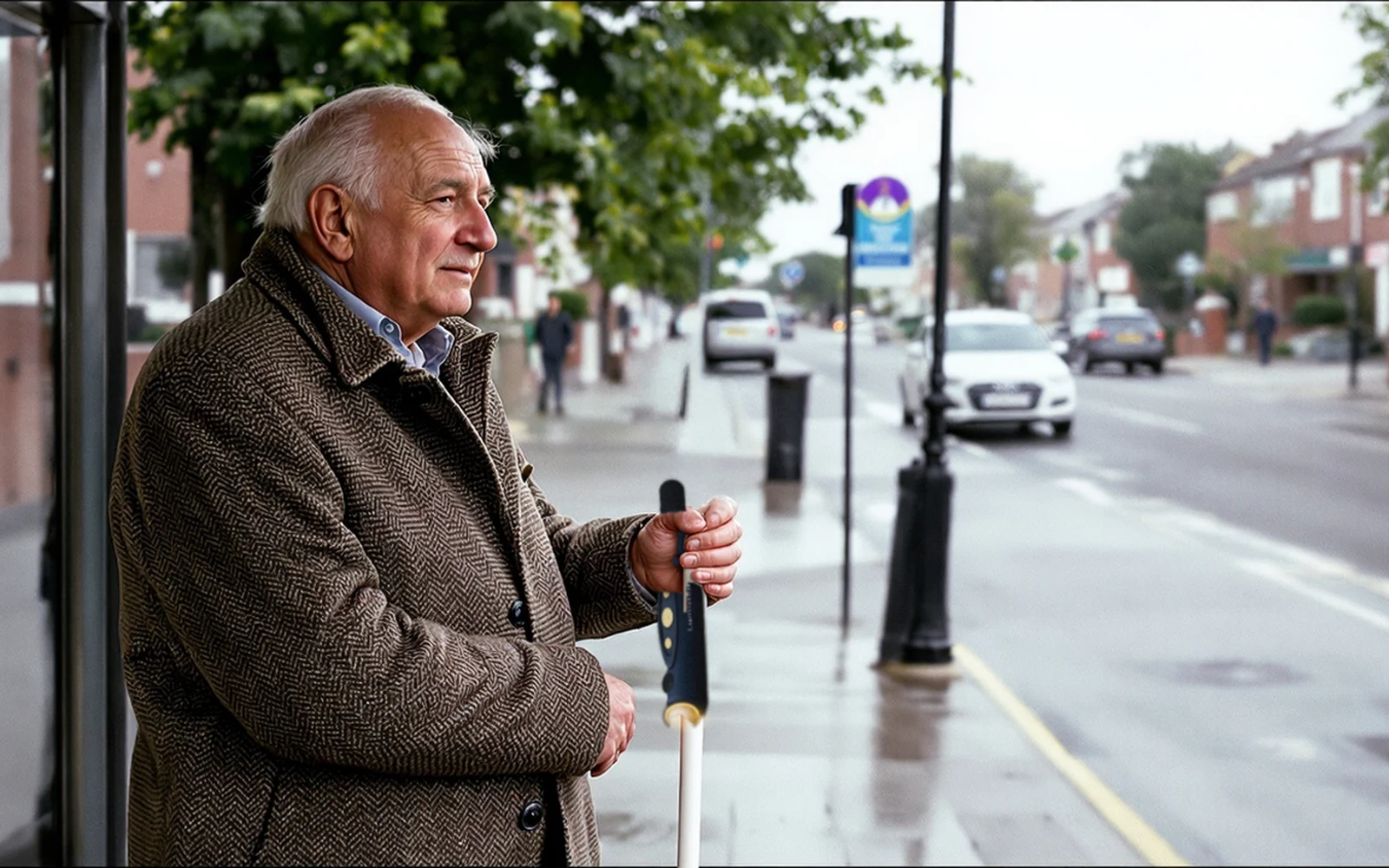
  • Masum Billah Abir

    Co-founder

    Masum Billah Abir co-founded Lumistep and leads product, design and software. With his studio, ANB Codes, he builds the Lumistep app, Lumi OS and this website in-house.

    Read the note from Masum Billah Abir

Advisers and roles we are recruiting

These are open roles, not people. Advisers are named only once they have agreed, and blind and low-vision people are paid for their time.

  • Hiring

    Hardware and manufacturing lead

    Owns design for manufacture, supplier audits, yield and the route from prototypes to the first production run.

  • Hiring

    Embedded firmware engineer

    Radar and laser sensing, vibration timing and power on the cane; Lumi OS on the glasses.

  • Adviser

    Orientation and mobility specialist

    A qualified cane trainer to shape the vibration language, training and safety messages.

  • Advisers

    Blind and low-vision co-designers

    Paid testers and advisers in South Asia and the UK who shape every decision.

  • Adviser

    Regulatory and quality

    UKCA/CE, FCC, radio approvals and the medical-device decision.

  • Adviser

    Impact measurement

    Designs the pilot study and IRIS+ reporting with an academic or NGO partner.

Risks and mitigations

What could go wrong, and our answer.

Nine risks we think about most. Open any one for our answer.
AdoptionPeople stop using it

Field trials with blind participants and a field pilot before any production run. Vibration first, speech second, and quiet unless something is in the path.

EvidenceOutcomes are unproven

No study yet shows a smart cane reduces falls or carer hours. Our pilot measures this before we make any outcome claim.

TechnologyReading with an event sensor

Reading still text from an event-based sensor is new science.[30] If tests fall short, we add a low-detail reading mode.

ManufacturingDelays and quality

Hardware slips; Glidance took about two years from pre-orders to early units.[96] Pre-certified modules, several sample suppliers, paid factory checks and batches of hundreds before thousands.

SupplyGlasses firmware access

Factories build to our design and hand over chip kits under contract. The buds and clip are our backup route.

PricingLow prices in South Asia

Premium markets, organisation contracts, sponsors and grants support the lower prices; local assembly as volume grows.

FundingFunding the next stage

Hardware companies need several rounds before they are profitable, and so will we. Lean team, grants first, and milestones that de-risk each next round.

RegulationMedical device rules and radio

Whether we are a medical device depends on our claims.[65][66] 60 GHz radar and laser rules are checked country by country before launch.

CompetitionBig tech and Envision's story

Big tech does reading well but not cane-level sensing, offline, at our price. Envision sold expensive glasses to a small paying market; we lead with a low-cost cane and institutional buyers.

SDGs and impact metrics

Impact, reported in the investors' language.

We map to UN SDG targets 3.8, 4.5, 8.5, 10.2, 11.2, 11.7 and 17.18,[119] report with IRIS+ metrics such as PI4060 and PI6266,[120][121] and describe impact on the five dimensions impact investors use.[125]

  • Reach

    Who we serve

    Kits delivered by country and by who paid; share of users on an allowance or below the poverty line; share of women, over-60s and rural users.

  • Depth

    What changes

    Solo trips and bumps per week, and family help hours, before and after 2 months in the field pilot.

  • Duration

    Does it last

    Share of users still active at 6 and 12 months, and QUEST 2.0 satisfaction scores.[126]

Investor FAQ

The hard questions, answered plainly.

The questions we get in every first meeting. If yours is missing, ask it in the form below and we answer it in writing.
Why won't Apple or Meta do this?

They already do reading and description well: Be My Eyes is free on Ray-Ban Meta glasses.[101] But Envision's co-founder says glasses should not be a primary navigation tool.[25]

Our core is the cane's obstacle sensing, offline voice in South Asian languages and a sub-US$100 price in South Asia: not where they compete. Lumistep is designed to work alongside them.

Envision and OrCam struggled. Why won't you?

Envision cited Apple and Meta and too few paying users;[10] OrCam's revenue fell to US$16M.[99] Both sold camera devices at US$1,899–4,250.

We differ on price (2–25 times lower), on buyer (governments and NGOs too, not only individuals) and by leading with the cane. Their lesson still applies, so our model does not depend on subscriptions.

How can such a low price work?

Premium markets (the UK, Europe, the US and the Gulf) carry the business; organisation buyers, sponsors and grants support the lower prices in South Asia. The low price matters because ADIP pays the full cost of aids up to ₹15,000[154] and mark-ups of up to six times keep aids out of reach.[5] The detailed economics are in our financial model, shared privately.

Is it a medical device?

It depends on what we claim. In the UK the maker's stated purpose decides.[65] In the US an electronic vision aid is Class I and exempt from 510(k).[66] Class I could open VA and NHS buyers at modest cost. The decision is open, and we make it with a regulatory adviser before anything is sold.

What certifications do you need?

Radio, EMC, electrical safety and battery testing, using pre-certified modules (about 3–4 months, lab estimates), plus importer registration in each South Asian market. 60 GHz radar and the Class 1 laser are checked for each country. Certification comes with the production round, after field results.

What is defensible?

No patents are filed or claimed. Our edge is execution: our own firmware and app, offline voice in South Asian languages, sensor tuning learned from real use, cost engineering and, once real, institutional relationships.

What about camera privacy?

European regulators say smart-glasses makers must make recording obvious to people nearby and cannot pass that duty to users.[14] Our glasses show an amber light whenever the camera is on, and nothing is stored by default.

Why South Asia first, not the UK or US?

About 12 million blind people live in South Asia.[3] Building and testing there is cheaper, offline voice in South Asian languages is a gap mainstream products leave, and public buyers already exist. The UK launches at the same time.

Who is on the team?

Founder Sajid Mahmud Saad and co-founder Masum Billah Abir, with the software built in-house. We are recruiting a hardware lead, an orientation and mobility specialist and paid blind and low-vision advisers. They are named only once they have agreed.

How much are you raising, and what happens next?

We are raising our first round, from angels, friends and family or small grants, to complete engineering and run field trials with blind participants and a field pilot with a blind charity over about six months.

Only after those results do we raise a production round, alongside grants. We do not promise profit by a set year. Our deck, financial model and data room are shared privately after a short call with the founders.

Which grants fit?

NIHR i4i FAST (£50–100k),[117] Bangladesh ICT Division startup grants (Tk 1–30 lakh by stage, up to Tk 50 lakh),[156] Indian assistive-tech challenges and, later, the EU EIC. None has been applied for or won yet.

What are the exit paths?

A strategic asset sale (Gentex paid about US$18.9M cash plus an earn-out for eSight's assets),[109] a bolt-on to an assistive-tech group,[111] or accessibility consolidation (Level Access and UserWay, about US$98.7M).[110] Expect modest multiples, not venture-scale outcomes.

What happens to users if Lumistep fails?

The cane and offline features work without a plan or our servers. Glasses that stop when payments stop have angered users;[102] we design so that never happens.

Can I see the financial model?

Yes. Our deck, financial model and data room are shared privately after a short call with the founders. Use the form below to arrange the call.

Talk to the founders

Let's talk.

Our deck, financial model and data room are shared privately after a short call with the founders. Tell us a little about yourself and we will arrange a time.
  • The deckProduct, plan and risks
  • The financial modelEvery assumption, shared privately
  • The data roomOpened after a short call

Partners, NGOs and public programmes are welcome too: choose "Organisation or NGO" in the form. Or read the impact model first.

We send the investor deck by email after a short reply. We never share your details.

Lumistep

Get involved

Three ways to help blind and low-vision people walk, read and travel on their own.

  • For people and families

    Join the waitlist

    Hear first about field trials and the first production kits, and help shape what we build.

    Join the waitlist
  • For charities, trainers and sponsors

    Support Lumistep

    Sponsor a kit, host a field trial or partner with us to reach the people who need it most.

    Ways to support
  • For investors

    Invest in Lumistep

    We are raising our first round to complete engineering and field trials. Let's talk.

    For investors