
In active development · the app and Lumi OS
TechnologyOffline
Maps, reading and voice that work without internet.
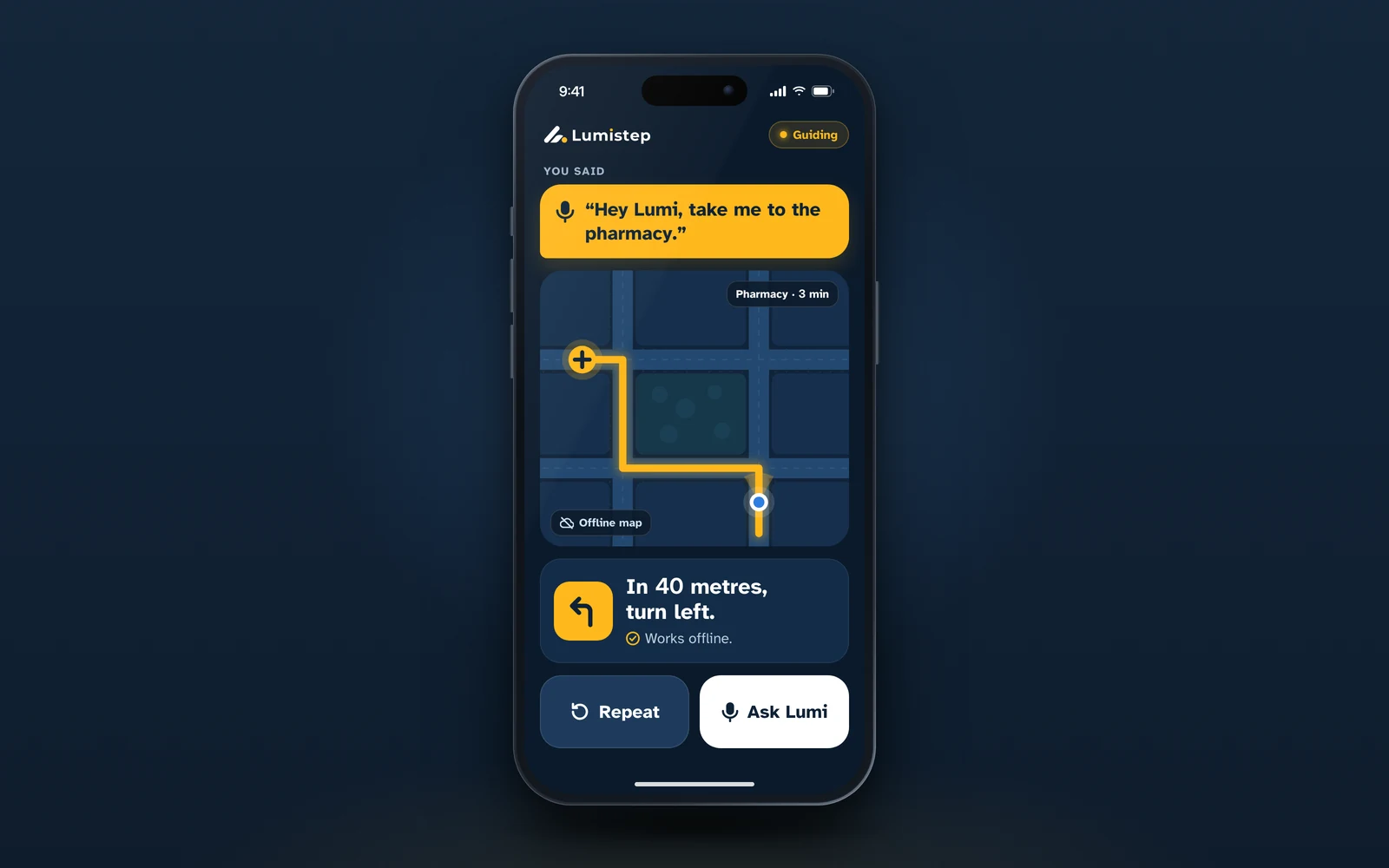
The Lumistep app does the heavy thinking on your phone. Internet makes some things richer, but the basics work offline, in English and South Asian languages, starting with Bangla. And the cane's warnings never needed a signal in the first place.
- 339 MB
- : All OpenStreetMap data for Bangladesh: a whole country's map fits on a phone.[37]
- SMS
- : SOS sends your location to your chosen contacts by text message, which works without mobile data.
- 3–6 weeks
- : Cane battery on everyday walking. Our target, not yet measured.
- A full day
- : Glasses battery target, from a 270–290 mAh cell.
The offline app
Six things that work with no signal.
Maps and routes
Take me to…
Voice
English and South Asian languages.
We start with English and Bangla. English speech on the phone is mature. South Asian languages are harder: open models exist but are tested mainly on clean speech, so we keep commands short and repeat destinations back to you.
Reading
Signs, letters, labels.
Money check
Which note is this?
On-device AI
Short descriptions, offline.
Small AI models built for phones can describe a scene without internet on newer handsets, but slowly.[50] Richer descriptions use an optional cloud AI, only when you ask.
Calls and SOS
Help, even with no data.
Call a family member or helper hands-free. SOS sends your location to your chosen contacts by SMS, which works without mobile data.
Offline and online
What works where.
Obstacle warnings
- With no signal
- Yes: inside the cane, no phone needed
- With internet, if you choose
- Nothing extra needed
Maps and routes
- With no signal
- Yes, once the map is downloaded
- With internet, if you choose
- Fresh map updates
Reading
- With no signal
- English on the phone; South Asian scripts best-effort
- With internet, if you choose
- More accurate reading
Describe a scene
- With no signal
- A short description, more slowly
- With internet, if you choose
- A richer description, when you ask
Money, colour and light
- With no signal
- Yes
- With internet, if you choose
- Nothing extra needed
Ask Lumi (conversation)
- With no signal
- No
- With internet, if you choose
- Yes
Call a helper
- With no signal
- Phone call only
- With internet, if you choose
- Live video through the camera
SOS
- With no signal
- Yes, by SMS
- With internet, if you choose
- Nothing extra needed
| Feature | With no signal | With internet, if you choose |
|---|---|---|
| Obstacle warnings | Yes: inside the cane, no phone needed | Nothing extra needed |
| Maps and routes | Yes, once the map is downloaded | Fresh map updates |
| Reading | English on the phone; South Asian scripts best-effort | More accurate reading |
| Describe a scene | A short description, more slowly | A richer description, when you ask |
| Money, colour and light | Yes | Nothing extra needed |
| Ask Lumi (conversation) | No | Yes |
| Call a helper | Phone call only | Live video through the camera |
| SOS | Yes, by SMS | Nothing extra needed |
Maps
South Asian cities vs London: how well are they mapped?
We counted pedestrian features in OpenStreetMap for equal-sized city centres (about 240–245 km² each).[52] The two South Asian city centres, Dhaka and Delhi, have far fewer mapped footpaths and crossings than London. So Lumistep guides you to “near” a place and leaves the last metres and every crossing to you, your cane and your training.
Approximate city-centre boxes, not official boundaries. Queried through the Overpass API on 19 November 2026. OpenStreetMap data © OpenStreetMap contributors, ODbL.
Show the numbers as a table
Footpaths
- Dhaka
- 919
- Delhi
- 5,741
- London
- 99,218
Separately mapped pavements
- Dhaka
- 69
- Delhi
- 302
- London
- 38,777
Crossings
- Dhaka
- 261
- Delhi
- 1,432
- London
- 27,952
Tactile paving points
- Dhaka
- 5
- Delhi
- 548
- London
- 22,716
Traffic signals
- Dhaka
- 93
- Delhi
- 568
- London
- 6,450
Roads tagged with pavement information
- Dhaka
- 939
- Delhi
- 370
- London
- 18,263
| OpenStreetMap feature | Dhaka | Delhi | London |
|---|---|---|---|
| Footpaths | 919 | 5,741 | 99,218 |
| Separately mapped pavements | 69 | 302 | 38,777 |
| Crossings | 261 | 1,432 | 27,952 |
| Tactile paving points | 5 | 548 | 22,716 |
| Traffic signals | 93 | 568 | 6,450 |
| Roads tagged with pavement information | 939 | 370 | 18,263 |
Battery
Weeks on the cane. A full day on your face.
- Cane
- 3–6 wk
- On everyday walking, from one 14500 cell (800 mAh). Target.
- Glasses
- 1 day
- From a 270–290 mAh cell. Target.
- Buds
- 4–6 h
- Plus 3–4 top-ups from the case. Target.
Power, part by part
- Cane battery
- One 14500 cell, 800 mAh
- Cane life (target)
- About 3–6 weeks of everyday walking
- Radar power
- About 1 mW at 10 readings a second[38]
- Glasses battery (target)
- 270–290 mAh, a full day
- Buds (target)
- 4–6 hours, plus 3–4 top-ups from the case
- Lumi Vision sensor
- About 3 mW typical[28]
- Charging
- USB-C on the cane; a case for the buds and clip
A flat battery is still a normal cane.
Below the smart handle is a full folding white cane shaft and tip. If the battery runs out, you lose the extra warnings, never the cane itself. The app warns you well before the battery is low.
Every device talks to the phone over Bluetooth Low Energy. No Wi-Fi is needed.
Technology
More on how Lumistep works.
Each part of the system has its own page, with sources and honest limits. Or start from the technology overview.
Sensing
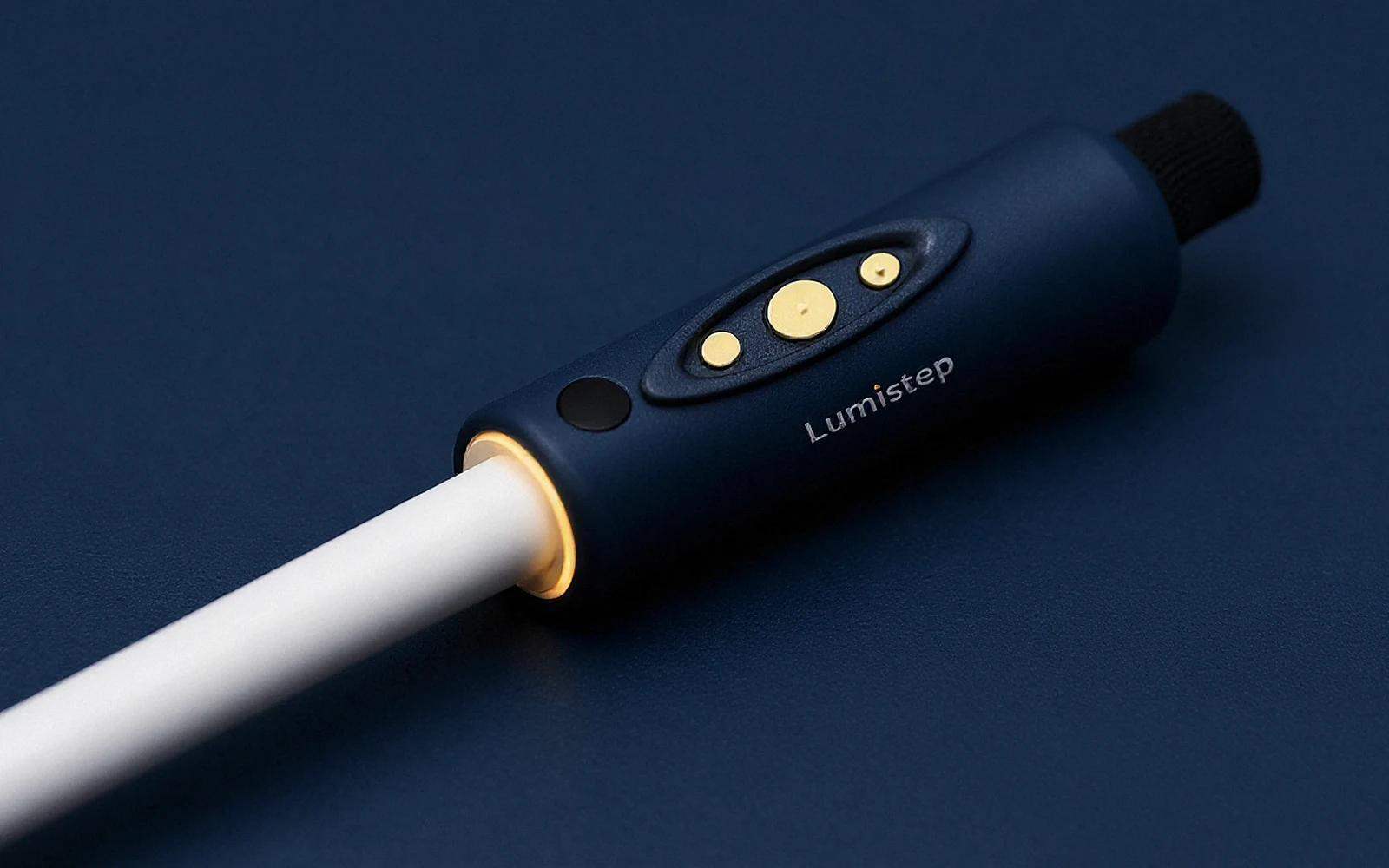
Radar, laser and a vibration language
How the smart handle feels the path ahead, from head height down to the kerb, and tells your hand which side.
Lumi Vision
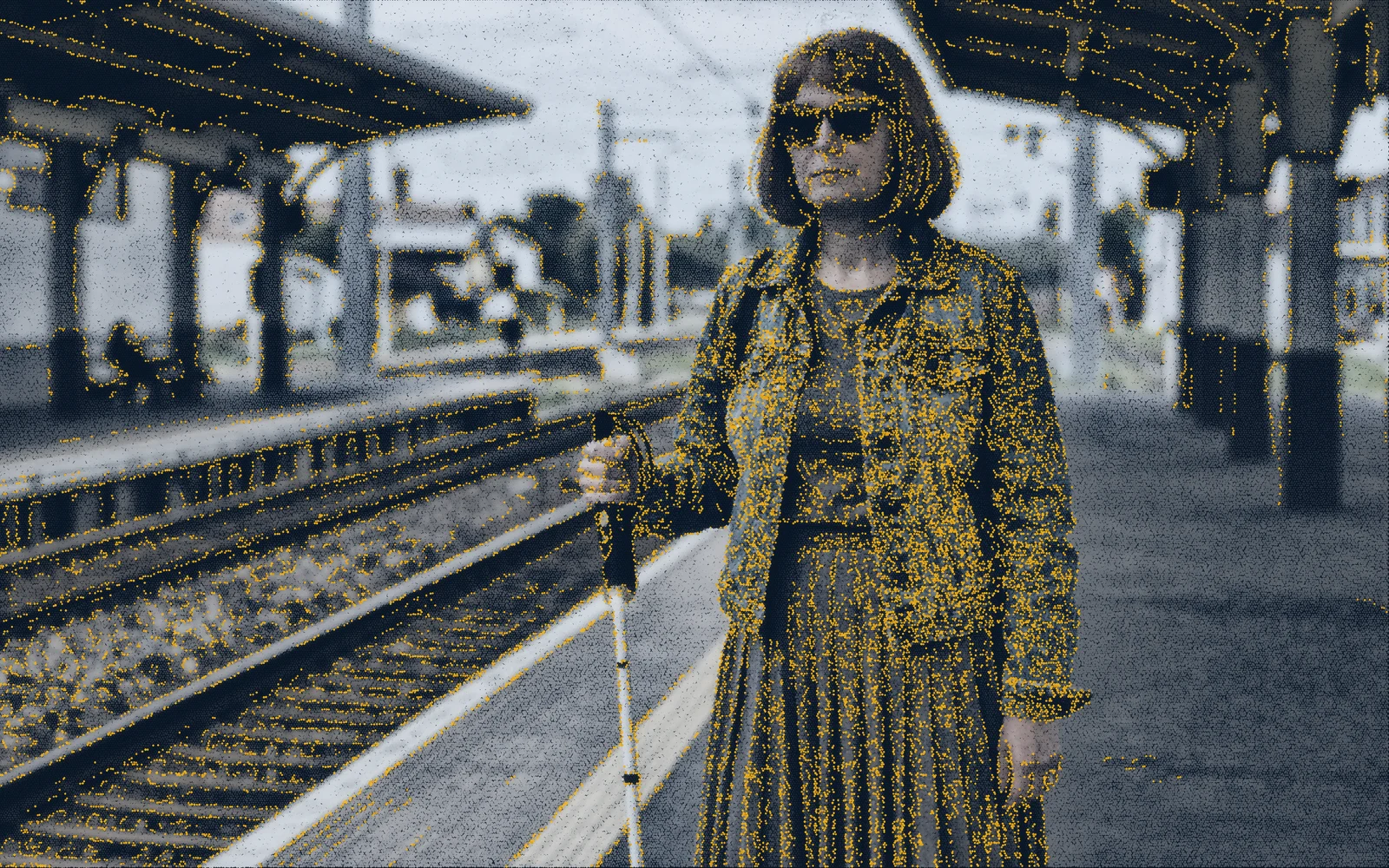
A camera that only processes what changes
The event sensor in the glasses and the buds' clip, what Lumi can read and describe, and where the science is still young.

Lumi OS
Our own software, and your privacy
The firmware inside every device: deliberate controls, quiet alerts, updates over the air and nothing stored by default.
Safety
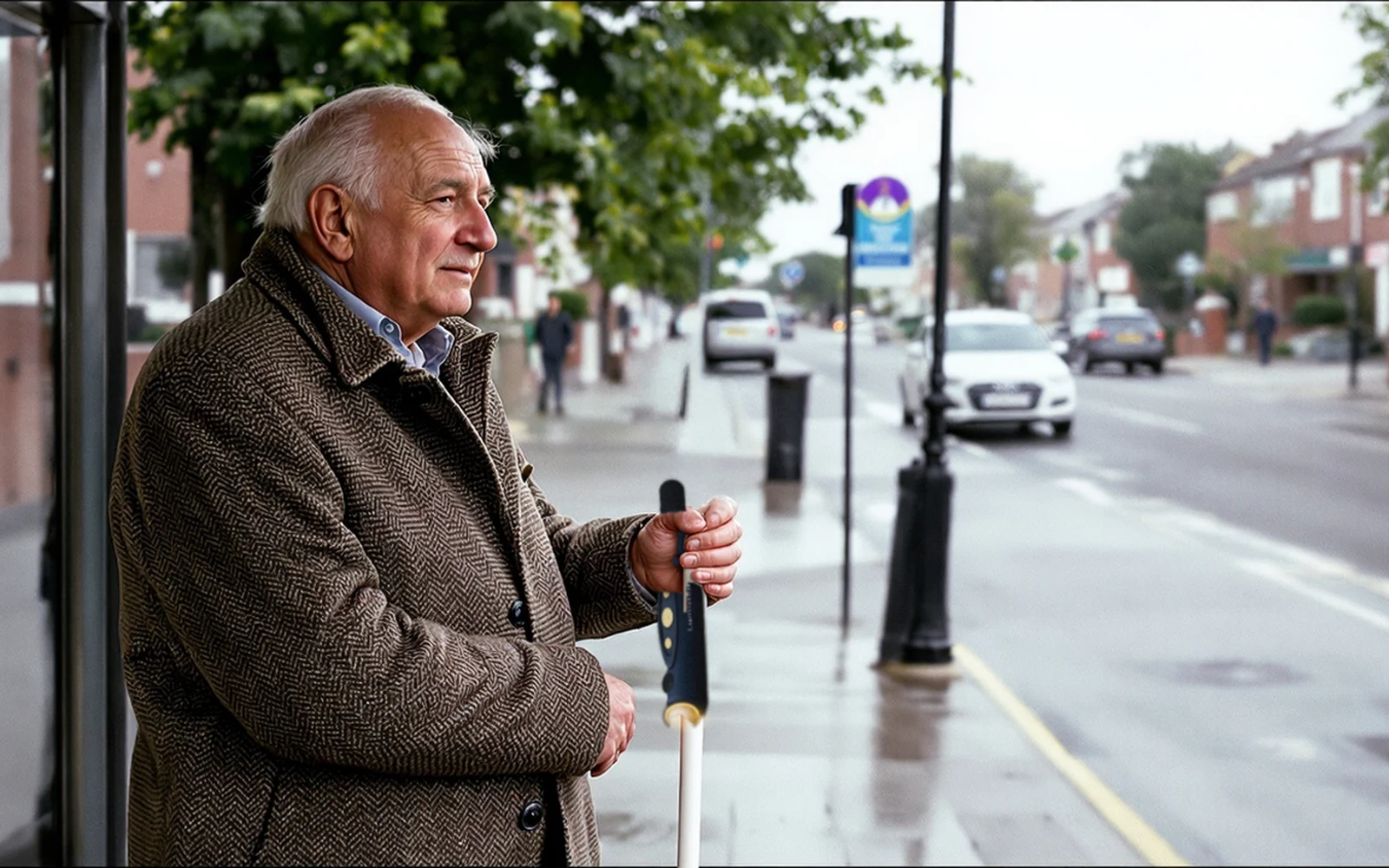
Certification, testing and honest limits
The tests before anything is sold, how we trial with blind people, what the research says and what Lumistep will never claim.
Lumistep
Get involved
Three ways to help blind and low-vision people walk, read and travel on their own.
For people and families
Join the waitlist
Hear first about field trials and the first production kits, and help shape what we build.
Join the waitlistFor charities, trainers and sponsors
Support Lumistep
Sponsor a kit, host a field trial or partner with us to reach the people who need it most.
Ways to supportFor investors
Invest in Lumistep
We are raising our first round to complete engineering and field trials. Let's talk.
For investors